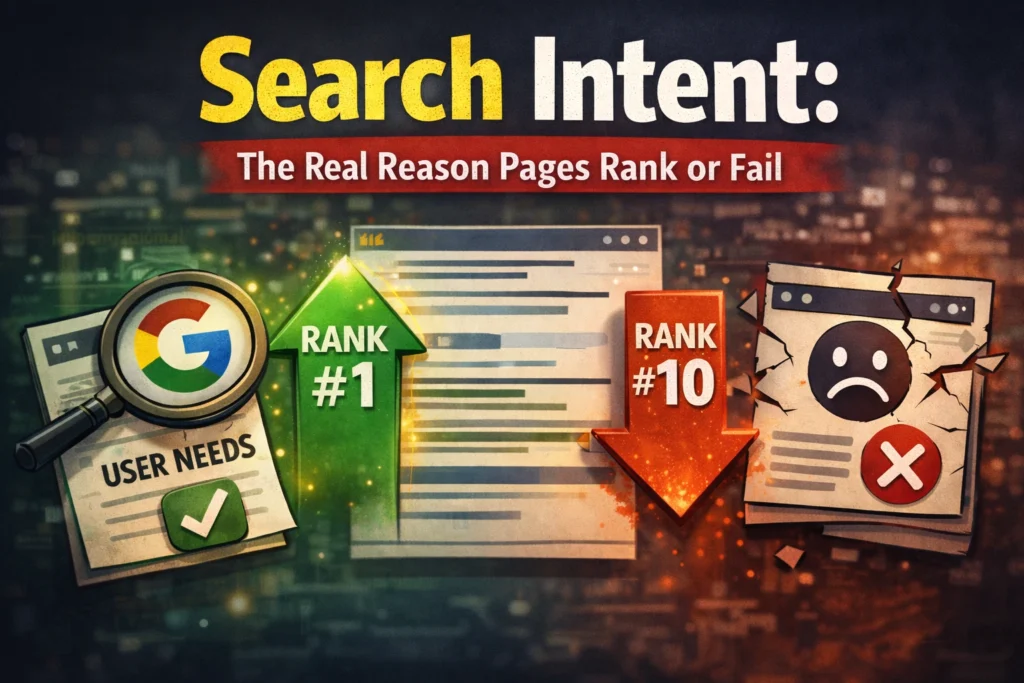
When people talk about SEO, keywords usually get all the attention. Yet, quietly over the years, something more has assumed the top leadership role, search intent. It is possible to find the correct keyword; you possess good backlinks, but nonetheless, you will not make it when your content does not correspond to what the user is actually seeking.
That is where the role of search intent in SEO is important. It explains why someone searches for a term, not just what they type into Google.
What Is Search Intent?
Every search has a purpose, and that purpose is known as search intent. In simple words, it’s the reason someone types a query into Google.
For example, when someone searches “SEO checklist,” they are probably looking for guidance, not a service page. But when they search “SEO agency near me,” the intent is clearly different.
Understanding this difference is the foundation of search intent in SEO, and it’s one of the main reasons some pages rank while others don’t.
Why Search Intent Matters More Than Keywords
Previously, SEO was apparently based on exact-match keywords. In the modern day, Google pays more attention to the satisfaction of the user of a page.
If your content doesn’t align with intent, rankings usually stall — even if your optimisation looks perfect on paper.
This is why two pages targeting the same keyword can perform very differently. One answers the user’s real question. The other simply mentions the keyword.
Google rewards the first one.
The Main Types of Search Intent
Most searches fall into four broad categories. You don’t need to memorise them, but understanding the difference helps a lot.
Informational intent – The user wants to gain knowledge about a topic.
(e.g., “what is on-page SEO”)
Navigational intent – The user wants to reach a particular website.
(e.g., “Google Search Console login”)
Commercial intent – The user is comparing options
(e.g., “best SEO tools for beginners”)
Transactional intent – The user is ready to act
(e.g., “hire SEO agency”)
Matching these correctly is a core part of search intent in SEO.
How Google Understands Search Intent
Google doesn’t guess intent randomly. It studies patterns.
It looks at:
- which type of pages users click
- How long do they stay
- whether they return to search
- How similar queries behave
Over time, Google learns what kind of content best satisfies a specific query. If your page doesn’t fit that pattern, ranking becomes difficult.
This is why simply adding more words or keywords doesn’t always help.
A Simple Example
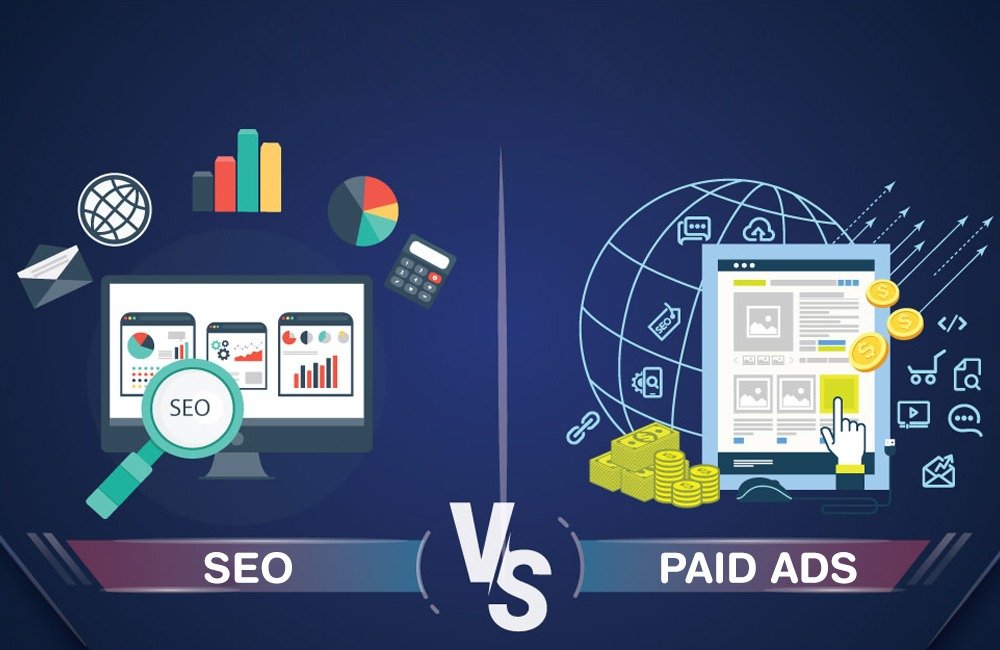
Imagine someone searches for “SEO vs paid ads”.
If most top results are comparison guides, then Google clearly sees informational intent. A sales-heavy service page won’t perform well here.
This is where search intent in SEO connects directly with content structure. Matching the format, depth, and tone of what already works often matters more than technical tweaks.
How to Identify Search Intent Before Writing
You don’t need fancy tools to understand intent. A quick Google search can tell you a lot.
Look at:
- the top-ranking pages
- the type of content (blog, list, service page)
- the angle they use
- the questions they answer
If most results are guides, your page should educate. If they’re product pages, your content should support decision-making.
This habit alone improves search intent in SEO more than most on-page tricks.
Common Mistakes Businesses Make with Search Intent
One of the most common mistakes is trying to rank a service page for informational queries. Another is writing blogs for keywords that clearly indicate buying intent.
These mismatches confuse Google and frustrate users.
SEO works best when content feels like a natural answer to the search — not a forced pitch.
How Search Intent Improves Rankings and Conversions
When intent is matched correctly:
- Users stay longer
- bounce rates drop
- engagement improves
- rankings stabilise
That’s why searcher intent in SEO isn’t just about traffic. It directly affects quality traffic — the kind that converts.
Final Thoughts
Search intent is no longer optional in SEO. It’s the filter through which Google evaluates relevance.
You don’t need to chase every keyword. You need to understand why people search and create content that fits naturally into that moment.
Once user intent in SEO is clear, everything else — keywords, structure, optimisation — becomes much easier.
Frequently Asked Questions
Q1: What is search intent in SEO?
Search intent in SEO refers to the purpose behind a user’s search and what they expect to find in the results.
Q2: How many types of search intent are there?
Generally, there are four: informational, navigational, commercial, and transactional.
Q3: Can a page rank without matching search intent?
Sometimes briefly, but long-term rankings are rare without intent alignment.
Q4: How do I check search intent for a keyword?
Search the keyword on Google and analyse the top results to see what type of content ranks.
Q5: Does searcher intent affect conversions?
Yes. When intent matches content, users are more likely to take action.